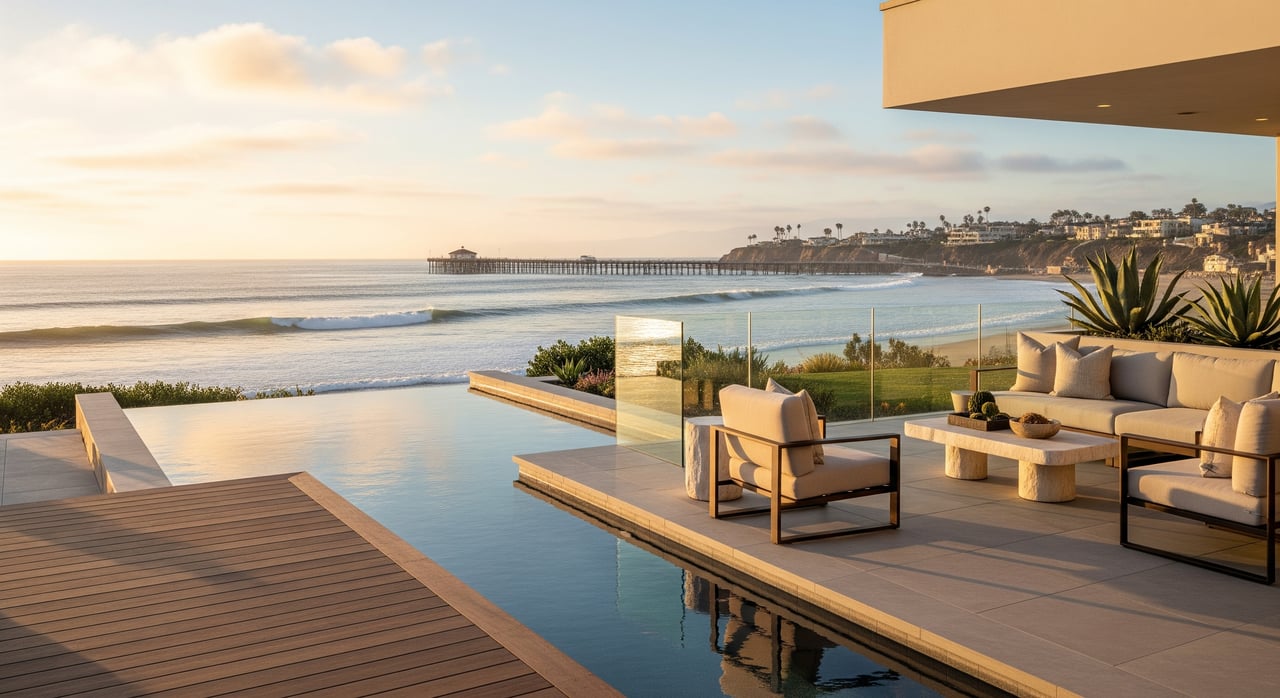
Torn between Oceanside and Carlsbad for your next move? You are not alone. Both offer beautiful coastline, strong job access, and a laid-back North County vibe, but they feel different day to day and can impact your budget, commute, and lifestyle in real ways. In this guide, you will get a clear, practical comparison across price, housing, transit, beach access, schools, and key tradeoffs, plus a checklist to move forward with confidence. Let’s dive in.
Quick feel for each city
Oceanside is the larger city by population and land area, home to about 176,000 residents. It blends classic beach-town energy near the pier and harbor with a wide mix of neighborhoods, from postwar single-family streets to newer infill condos. The downtown and Transit Center area offer a walkable hub, and you will find strong transit connections and a lively surf and harbor scene.
Carlsbad, with roughly 115,000 residents, skews more suburban and planned in layout. Many neighborhoods feature larger lots, newer construction, and resort-style amenities. The Village area provides a compact coastal downtown, and the city’s beaches, lagoons, and golf courses create a calmer, family-focused feel in many pockets.
What your budget buys
Carlsbad homes typically command higher prices than comparable options in Oceanside. Recent market snapshots show Carlsbad’s single-family medians in the low-to-mid seven figures, while Oceanside often comes in several hundred thousand dollars lower on average. These medians change month to month, so use a current MLS snapshot when you are ready to write an offer.
What you will see on the ground:
- Oceanside housing types: Older single-family neighborhoods from the 1960s to 1980s, mid-century bungalows near the pier, condos and apartments around downtown and the harbor, plus newer infill options along major corridors. Density is higher near the coast and transit.
- Carlsbad housing types: Master-planned communities like La Costa and Aviara, larger-lot single-family homes, gated enclaves, golf-course properties, and newer luxury townhomes near coastal nodes. You will see fewer high-density multifamily pockets than in Oceanside.
Ownership costs beyond price matter too:
- HOAs and amenities: Carlsbad’s planned communities frequently include HOAs with notable monthly fees that cover amenities like pools, parks, and gated security. Oceanside offers variety, including many detached homes with no HOA and a range of condo/townhome HOAs with modest to moderate fees. Always review CC&Rs, reserves, and special assessments before committing.
- Rental dynamics: Oceanside supports a sizable rental market given its coastal appeal and proximity to Camp Pendleton, while Carlsbad’s rental pool leans toward higher-end product and short-term vacation options in coastal pockets. Verify each city’s short-term rental rules before purchasing with STR income in mind.
Commute and transit
Both cities sit on the I-5 coastal corridor, and traffic varies by time of day. If you drive to downtown San Diego, expect roughly 35 to 60+ minutes from Oceanside and about 30 to 50 minutes from Carlsbad in peak periods. Traffic north to Orange County or south toward San Diego can be congested during rush hours.
Key routes and rail:
- I-5: The main north-south artery for both cities.
- SR-78 and SR-76: Important east-west options from Oceanside to inland jobs in Vista, San Marcos, and Escondido.
- Carlsbad arterials: Palomar Airport Road and Car Country Drive connect neighborhoods to I-5.
- COASTER commuter rail: Stations in Oceanside and in Carlsbad at Village and Poinsettia can make trips to downtown San Diego more predictable.
- Pacific Surfliner and BREEZE bus: Additional intercity and regional connections.
- SPRINTER: Light rail from Oceanside to Escondido serves the inland corridor.
Tip: Test your real commute. Ride the COASTER at your typical departure time and drive I-5 on a weekday in both directions. The best choice often comes down to how close you live to a rail station and how you time your trips.
Beach access and outdoors
Oceanside’s shoreline is anchored by its iconic wooden pier and active harbor. You will find broad sandy beaches, surf breaks, and a lively coastal boardwalk experience, along with public facilities and beach parking near the pier and harbor. The atmosphere is energetic, especially on weekends and during events.
Carlsbad features long stretches of bluff-backed beaches such as Tamarack and South Carlsbad State Beach, lagoon environments like Batiquitos, and a walkable Village near the sand. Many neighborhoods feel quieter and more residential along the coast, with easy access to parks, trails, and golf.
Both cities deliver strong outdoor lifestyles. Oceanside has Guajome Regional Park and access to lagoons and coastal trails. Carlsbad adds resort-style amenities, golf at Aviara, the seasonal Flower Fields, and family attractions like Legoland.
Schools and education
School quality perceptions can be a major decision driver. Carlsbad Unified is commonly reported by rating services as higher-rated overall, while Oceanside Unified is a larger district with a mix of school performance, including some strong options and alternative programs. Because school experiences vary by neighborhood and year, review current district data, boundary maps, and campus tours to see what fits your needs.
Lifestyle tradeoffs
Here are the practical differences many buyers weigh:
- Price vs beach proximity: Carlsbad typically costs more for similar coastal distance and newer homes. Oceanside offers greater affordability near the beach but with wider variation in home age and condition.
- Energy level: Oceanside’s pier and harbor create a lively, maritime vibe. Carlsbad’s coastal pockets lean toward a calmer, resort-like rhythm with suburban quiet in many neighborhoods.
- Walkability vs commute predictability: Oceanside’s downtown and Transit Center can support a more walkable, transit-oriented lifestyle. Carlsbad’s suburban layout and newer road networks can make car commutes simpler in some directions and at certain times.
- HOAs and amenities: Carlsbad’s master-planned communities often provide robust amenities with higher monthly fees. Oceanside offers a broader mix, including many no-HOA options.
- Rental strategy: Oceanside’s rental base is sizable, including military-adjacent demand. Carlsbad supports higher-end rentals and vacation stays in certain coastal zones. Confirm city rules for short-term rentals before pursuing income plans.
- Coastal upkeep and risk: Salt air, humidity, and potential flood or erosion exposure raise maintenance and insurance questions in both cities. For bluff or low-lying properties, review FEMA flood maps, city coastal plans, and obtain property-specific reports where needed.
Which fits you
You might favor Oceanside if you want:
- A more attainable path to coastal ownership.
- A lively harbor and pier scene with growing downtown dining and breweries.
- Transit-oriented living near the Oceanside Transit Center and walkable beach access.
- Flexibility to find no-HOA single-family options alongside condo choices.
You might lean toward Carlsbad if you prefer:
- Newer construction, larger lots, or master-planned communities.
- A calmer coastal feel with family-focused amenities and resort-style options.
- Proximity to Carlsbad Village or Poinsettia COASTER stations for a predictable rail commute.
- School ratings that are commonly viewed as a strength by many family buyers.
Smart next steps
Use this checklist to move from research to results:
- Confirm current MLS medians and days on market for your target neighborhoods. Markets shift quickly.
- Visit shortlists at peak commute times. Drive I-5 and your local arterials, then compare to COASTER timing.
- If coastal, review FEMA flood designations and ask insurers for premium estimates.
- For bluff-front or low-lying areas, obtain up-to-date geotechnical or coastal reports and review any required permits.
- If buying into an HOA, read CC&Rs, reserve studies, and special assessment history before you write an offer.
- Review school boundary maps and recent data if schools are a priority.
- Consider rental rules if you plan to house-hack, rent seasonally, or hold as an investment.
When you are ready, get pre-qualified so you can act fast and negotiate with confidence. Working with a single advisor who can guide your search and your financing can remove friction and reduce risk.
If you want a clear plan that aligns budget, commute, and coastal lifestyle, let’s talk. As a dual-licensed real estate advisor and loan officer, I can help you compare Oceanside and Carlsbad, line up your pre-approval, and move from offer to closing with fewer handoffs. Book a consultation with Renaldo Wilson to get started.
FAQs
How much more in Carlsbad for similar coastal access?
- Carlsbad single-family medians are commonly higher and can be several hundred thousand dollars above Oceanside on average, though month-to-month shifts mean you should verify current MLS data when you shop.
Is the COASTER commute better from Oceanside or Carlsbad?
- Both work, since Oceanside plus Carlsbad Village and Poinsettia stations provide access to downtown San Diego, and proximity to the station is the biggest factor in door-to-door time.
Are there walkable areas in Oceanside and Carlsbad?
- Yes, Oceanside’s downtown and harbor area and Carlsbad Village both offer walkable dining, shops, and beach access, with transit nodes that support car-light living.
What about HOA fees in Oceanside and Carlsbad?
- Carlsbad’s master-planned communities often have higher monthly fees tied to resort-style amenities, while Oceanside includes many no-HOA single-family areas plus a range of condo and townhome HOAs.
What coastal risks matter in Oceanside and Carlsbad?
- Plan for salt-related maintenance, humidity, and potential flood or erosion exposure along bluffs or low-lying zones, and review FEMA flood maps, city coastal plans, and property-level reports during due diligence.